The Slytherin Common Room is one of the most atmospheric spaces in Hogwarts Legacy, serving as a home base for players sorted into the House of Serpents. Whether you’re a first-year witch or wizard just entering the castle or a returning player exploring every corner of Hogwarts, understanding the layout, secrets, and customization options available in this underground sanctuary can significantly enhance your gameplay. Unlike Gryffindor’s lively common room or Hufflepuff’s cozy burrow, the Slytherin Common Room exudes ambition, cunning, and a touch of dark elegance, and there’s much more to discover beyond the initial impression. This guide covers everything from navigation and hidden passages to collectibles, questlines, and optimization strategies that’ll help you master this iconic space and unlock all its unique benefits.
Table of Contents
ToggleKey Takeaways
- The Slytherin Common Room in Hogwarts Legacy features a dungeon location with hidden passages, collectibles, and exclusive questlines that reward thorough exploration and enhance your gameplay experience.
- Customizing your personal dorm space with unlocked decor items reflects your character’s achievements and playstyle while maintaining the house’s signature green, silver, and gothic aesthetic.
- Slytherin house-specific questlines provide exclusive spells, abilities, and gear that emphasize crowd control and cunning, offering mechanical advantages for players committed to the house’s ambitious philosophy.
- Regular NPC interactions and character relationship-building in the common room unlock special dialogue, house events, and services that reward players who invest time in community engagement.
- Field Guide pages, artifacts, and treasure chests scattered throughout the Slytherin Common Room provide cosmetic rewards, currency, and rare equipment for completionists and casual explorers alike.
Overview of the Slytherin Common Room
Location and Access
The Slytherin Common Room is positioned beneath the castle, nestled within the dungeons near the Potions Classroom. This subterranean location reinforces the house’s identity, mysterious, secretive, and deliberately separated from the castle’s more visible spaces. To access it, players must approach the entrance hidden behind a stone wall adorned with serpent carvings. The entrance itself acts as a gateway: approaching it triggers environmental interactions that reveal the passage. Once you’ve discovered it during the main story progression, you can fast-travel directly to the Slytherin Common Room from any portrait hole or Fast Travel point.
The access system rewards exploration and house loyalty, only Slytherin students gain immediate entry, though the game doesn’t prevent other house members from discovering the location through exploration. The underground setting creates a sense of exclusivity that matches the house’s ambitious and somewhat shadowy reputation.
Visual Design and Atmosphere
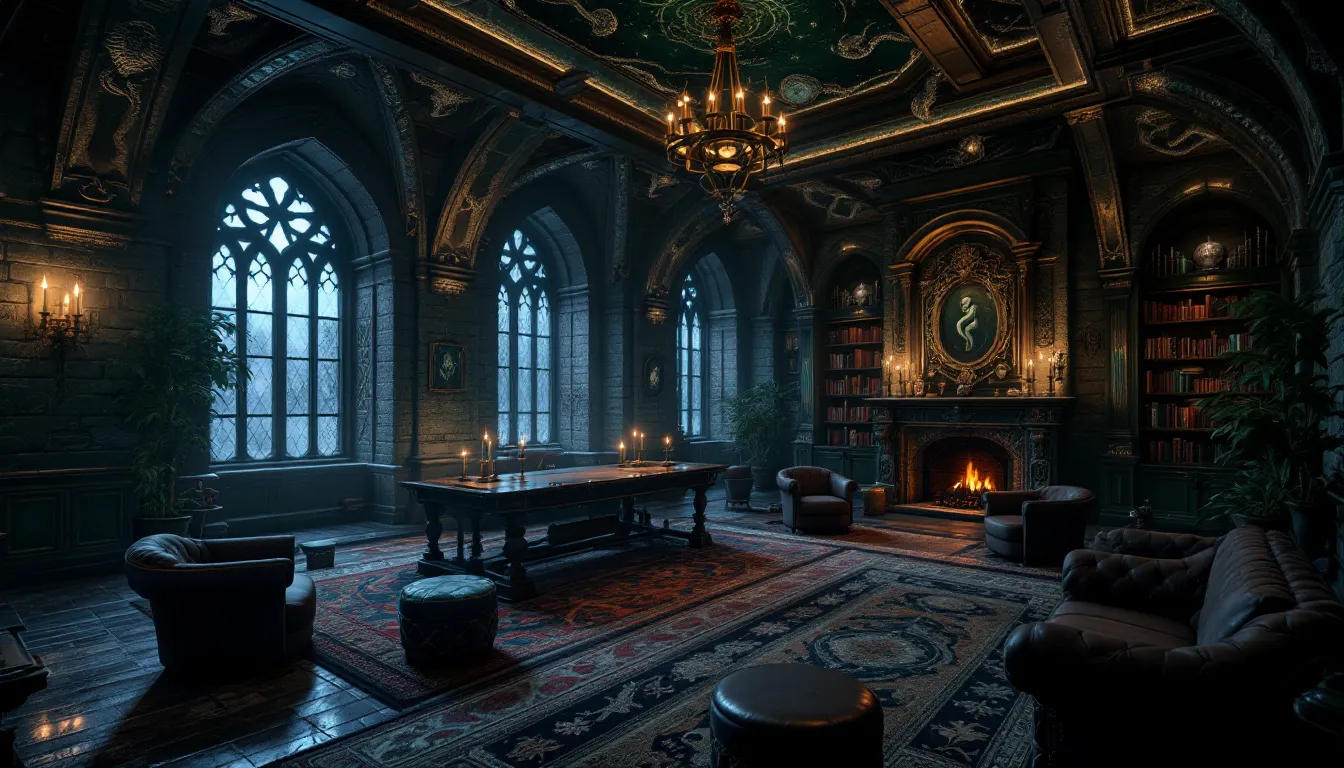
The Slytherin Common Room perfectly captures the aesthetic that fans expect from the house. Green and silver accents dominate the color scheme, with stone walls featuring elaborate carved serpents and gothic architectural details. The space feels larger than it initially appears, with high ceilings adorned with enchanted objects that hang suspended in the air. Soft, ambient lighting from floating candles and torches creates shadows that make the room feel both welcoming and slightly ominous.
Furniture throughout the common room reflects the house’s refined taste, dark wood furnishings, leather seating, and ornate decorative pieces suggest wealth and status. The fireplace serves as a central gathering point, often where NPCs cluster during common areas. Compared to other house common rooms, the Slytherin space emphasizes grandeur and sophistication over warmth, making it feel like a gathering place for ambitious young witches and wizards rather than a casual hangout spot. The dungeon setting also provides natural acoustic properties that make conversations feel private, fitting for a house known for plotting and scheming.
Navigating the Common Room Layout
Main Areas and Furniture Placement
The Slytherin Common Room is divided into several functional zones, each with distinct purposes and furniture arrangements. The main gathering space opens into a large common area centered around the fireplace, flanked by comfortable seating clusters perfect for studying or socializing. Multiple sofas and armchairs are positioned throughout, offering both individual and group seating options.
To one side of the main space sits the library corner, furnished with desks, bookshelves, and reading chairs where students spend time studying. This area naturally clusters collectibles and serves as a common NPC hangout spot. The opposite wall features additional seating and decorative pieces that reinforce the house’s aesthetic without cluttering the space. Unlike the cramped dormitory spaces in other areas of Hogwarts, the common room provides ample room for movement and exploration.
The dorm access point is typically located at the rear of the main space, marked by a portrait entrance or magical archway. Players can interact with this to access their personal dorm room, a separate space where additional customization and storage occur. Understanding the layout helps players efficiently navigate to quests, collectibles, and NPCs without unnecessary backtracking.
Hidden Passages and Secret Doors
Hidden passages are a signature element of Hogwarts’ design, and the Slytherin Common Room contains several that reward thorough exploration. These passages often lead to shortcuts, secret collectible locations, or areas that only unlock during specific questlines. Some passages are marked by subtle environmental clues, loose stone panels, suspicious wall sections, or areas that shimmer slightly when you approach them.
Interacting with these hidden doors typically requires a spell cast or simple button prompt, making them accessible without special abilities or items. The passages serve both gameplay and lore purposes: they reinforce Slytherin’s reputation as a house with secrets, provide shortcuts to other castle areas, and sometimes hide side-quest locations or rare collectibles. Players should approach suspicious-looking wall sections and use their investigation skills, as some passages won’t reveal themselves without interaction.
One particularly significant passage connects to other areas of the dungeon complex, creating shortcuts that more experienced players can exploit for faster traversal. The game rewards curiosity here, players who take time to examine walls and test interactions often discover valuable collectibles or quest-related areas before they’re explicitly required. During your first playthrough, approach walls with carved serpents or unusual stone patterns with extra attention.
Cosmetics and Customization Options
Unlockable Decor and Furnishings
Hogwarts Legacy allows players to customize their personal dorm space, and the Slytherin house offers a distinctive collection of decor items that reinforce house identity. These furnishings unlock through progression, questline completion, and exploration. Early game items might include basic green and silver throw pillows, simple wall hangings, or modest furniture pieces. As you progress and complete house-specific quests, more elaborate options become available, ornate mirrors, high-end furniture, and themed decorative pieces that showcase Slytherin’s ambitious aesthetic.
Some customization items tie directly to questlines. Completing a Slytherin house quest might unlock a specific piece of furniture or wall decoration that reflects that quest’s events. Collectibles like Field Guide pages sometimes reward cosmetic items upon completion of sets. Players can browse available items through the dorm customization menu and apply their choices immediately, allowing for real-time experimentation with different arrangements and aesthetic combinations.
The cosmetic system extends beyond pure aesthetics, many players view their dorm space as a personal achievement display. Items unlocked through challenging questlines or rare discoveries become status symbols within the community, much like gear in other RPGs. The Slytherin aesthetic allows for creating a dorm space that feels genuinely personal while maintaining the house’s visual identity.
Personalization for Your Dorm Space
Your personal dorm room represents your character’s private sanctuary within Hogwarts Castle. The space is small but fully customizable, featuring walls, floor options, furniture, wall decorations, and ambient elements like lighting or floating objects. Unlike the common room, which remains static regardless of house, your dorm space becomes a reflection of your personal playstyle and achievements.
Players can create completely different aesthetic experiences within the same space. Some focus on a minimalist, scholarly setup with desks and bookshelves. Others prioritize comfort with seating areas and decorative pieces that evoke luxury. Still others create thematic arrangements that tell stories, collections of trophies displayed prominently, or decor that references memorable moments from their playthrough.
Customization happens through interaction with a wardrobe or furniture management interface, typically accessible from your dorm room. You can preview items before applying them, allowing strategic planning of your space’s final appearance. The system respects personal expression while maintaining house identity, letting Slytherin Common Room in Hogwarts Legacy feel both distinctly yours and unmistakably part of the house.
Collectibles and Loot in Slytherin
Field Guide Pages and Artifacts
The Slytherin Common Room contains Field Guide pages that contribute to the game’s extensive collection system. These pages document magical creatures, characters, and locations encountered throughout Hogwarts, and discovering them in specific areas provides both progression and lore satisfaction. Within the common room, several pages can be found through exploration, examining bookshelves, investigating dark corners, or accessing hidden passages.
Field Guide completion unlocks achievements and cosmetic rewards, making the collection process rewarding beyond mere completion. Each page discovered adds a new entry to your in-game encyclopedia, providing creature stats, background lore, and sometimes hints about where to encounter them in the wider world. The common room’s pages often relate to Slytherin-specific creatures or characters, creating thematic cohesion.
Artifacts represent another collectible category, these are actual in-game objects that appear as interactive pickups. Within the common room, artifacts might include historical relics, magical instruments, or decorative pieces that unlock when examined. Some artifacts trigger small scenes or dialogue when collected, adding narrative depth. Collecting all artifacts in a given area sometimes unlocks special achievements or contributes to house-specific challenges.
Treasure Chest Locations
Treasure chests scattered throughout the Slytherin Common Room contain valuable loot ranging from currency to rare equipment and cosmetic items. These chests are typically hidden in less obvious locations, behind furniture, within alcoves, or accessible through hidden passages. Some chests require solving environmental puzzles, defeating enemies nearby, or completing specific actions before they unlock.
The value of chest contents varies based on difficulty level and your progression stage. Early game chests might provide basic supplies or modest currency, while later-game chests reward legendary equipment or significant gold amounts. Some chests are cosmetic-focused, rewarding dorm customization items or outfit pieces exclusively.
Systematic exploration of the common room will reveal most treasure chests, but some require specific triggers. A chest might only become accessible after completing a particular questline, or it might be guarded by enemies that need defeat first. The game rewards patient exploration, players who thoroughly examine every corner discover significantly more resources than those who rush through. Taking time to explore Hogwarts Legacy for beginners ensures you don’t miss valuable loot in your house’s base.
Quests and NPCs in the Common Room
Character Interactions and House Events
The Slytherin Common Room serves as a social hub where various NPCs gather, each with their own personalities, questlines, and house allegiances. Key Slytherin characters frequent the space, creating opportunities for casual conversation and relationship building. These interactions go beyond simple greeting exchanges, NPCs have distinct dialogue trees that develop over the course of your playthrough, reflecting your choices and progression.
House events occasionally occur in the common room, bringing multiple NPCs together for scripted scenes or gatherings. These events are typically tied to the main story or house-specific questlines, creating dramatic moments that reinforce house identity and character relationships. During events, the common room’s atmosphere shifts, NPCs cluster in different locations, ambient lighting might change, and conversations feel more consequential.
Character interactions unlock gradually through natural gameplay. Early conversations might be simple exchanges, but as you complete quests and build relationships, characters open up about deeper motivations and secrets. The Slytherin house emphasizes ambition and cunning, so interactions often revolve around house pride, academic competition, or scheming against rival houses. Some characters serve as mentors or confidants, offering advice or assistance during challenging questlines.
Common Room Specific Questlines
House-specific questlines deepen your connection to Slytherin and provide exclusive story content unavailable to other houses. These quests typically revolve around house competitions, conflicts within the house, or external challenges that require house unity. Quest markers often appear in the common room itself, with NPCs serving as quest-givers who pull you into extended storylines.
Slytherin questlines tend to emphasize themes of ambition, cunning, and house loyalty. You might compete against other houses for prestige, uncover mysteries within house history, or navigate complex social dynamics between ambitious students. These quests reward exclusive items, cosmetics, or ability upgrades that feel meaningful to your character’s development.
Completion of house questlines unlocks special recognition, achievements, unique dialogue from NPCs, or even changes to how the house community treats your character. Some questlines provide crucial character development, fleshing out Slytherin members who might otherwise remain generic NPCs. The narrative weight of these quests makes them feel essential to understanding your character’s role within their house and Hogwarts community overall. Exploring Hogwarts Legacy guide essentials helps ensure you don’t miss these unique story opportunities.
Gameplay Tips for Slytherin Players
Advantages and Unique Mechanics
Choosing Slytherin provides specific gameplay advantages that extend beyond flavor and into actual mechanical benefits. The house gains access to exclusive spells and abilities that complement an ambitious, cunning playstyle. These abilities often emphasize crowd control, deception, and strategic positioning, allowing players to control encounters through intelligence rather than pure brute force.
Slytherin house quests sometimes reward exclusive gear with unique stats or special abilities that align with the house’s philosophy. These items might include robes or accessories that boost specific spell schools or grant bonuses to stealth-related mechanics. The cumulative effect makes a Slytherin-focused build feel mechanically distinct from other houses, rewarding players who commit to the house identity.
Another advantage lies in NPC reputation, Slytherin members often grant favorable treatment or additional quest options if they view your character as ambitious and capable. Building positive relationships with key house members can unlock special services, discounts at Hogsmeade shops, or access to exclusive locations. The common room becomes more rewarding the more you engage with its inhabitants and side content.
Optimization Strategies for House-Specific Content
Maximizing your Slytherin playthrough requires understanding how to leverage house-specific resources and opportunities. First, prioritize completing house questlines early when possible, these provide stat boosts, ability unlocks, and cosmetic rewards that scale with your progression. Starting with house quests ensures you benefit from their rewards throughout the rest of your playthrough.
Second, regularly visit the common room to check for new dialogue options or quest markers from NPCs. Unlike main quest progression that follows a rigid path, house content often becomes available in clusters, rewarding players who frequently return to the common room to check for updates. Setting aside time after major story beats to explore house interaction ensures you catch all available content.
Third, collect all common room Field Guide pages and artifacts early. These unlock quickly through exploration and provide immediate cosmetic rewards or progression bonuses. Unlike some collectibles hidden in dangerous dungeons, common room items are risk-free and provide easy wins for completion-focused players.
Fourth, use Hogwarts Legacy techniques for combat mastery to approach house-specific challenges optimally. Some quests require defeating enemies or completing objectives under specific conditions. Understanding the available spells, potions, and combat mechanics lets you prepare appropriately rather than approaching encounters unprepared.
Finally, engage with the community’s collective knowledge. Gaming communities sharing insights on RPG Site and similar platforms regularly discuss optimal build strategies, hidden secrets, and efficient collectible routes. Slytherin players benefit from understanding meta approaches to house-specific content, allowing informed decisions about which abilities and items best suit your playstyle. The house’s emphasis on cunning and strategy rewards calculated decision-making over improvisation.
Conclusion
The Slytherin Common Room represents far more than a decorative space in Hogwarts Legacy, it’s a fully realized hub that rewards exploration, houses meaningful character interactions, and provides exclusive gameplay content. From understanding its sophisticated layout and discovering hidden passages to customizing your personal dorm space and completing house-specific questlines, there’s substantial depth waiting for players who take time to engage with the space thoroughly.
Mastering this area transforms your Slytherin playthrough from a generic experience into something distinctly memorable. The combination of strategic mechanical advantages, exclusive cosmetics, and compelling narrative content makes investing in common room exploration feel valuable rather than optional. Whether you’re drawn to the house’s ambitious philosophy or simply appreciate the dungeon’s elegant atmosphere, understanding every corner, from treasure chest locations to NPC dialogue sequences, enhances your overall Hogwarts Legacy experience.
The beauty of Hogwarts Legacy’s design lies in how it respects player agency: nothing about the common room feels mandatory, yet everything within it offers rewards worth pursuing. That balance makes the space engaging for both completionists hunting every last collectible and casual players simply enjoying the atmosphere. Your Slytherin experience will eventually reflect your investment in the space, the more you explore, interact, and engage, the more the common room becomes genuinely yours.