Whether you’re running a gaming blog, creating YouTube thumbnails, or building overlays for your Twitch stream, Nintendo Switch clipart has become essential for gaming creators. The visual appeal of your content can make or break engagement, and having access to high-quality, authentic Nintendo Switch imagery is no longer optional, it’s expected. From vibrant character art to polished hardware illustrations, the right clipart transforms ordinary projects into something that catches a viewer’s eye in a crowded content landscape. This guide walks you through everything you need to know about sourcing, using, and customizing Nintendo Switch clipart in 2026, whether you’re a seasoned content creator or just starting to build your gaming portfolio.
Table of Contents
ToggleKey Takeaways
- Nintendo Switch clipart is essential for gaming creators, with quality visual assets significantly improving click-through rates and viewer engagement across YouTube, Twitch, and Discord platforms.
- High-resolution Nintendo Switch clipart in appropriate formats (PNG with transparency, SVG vectors) is critical for professional projects—thumbnails need minimum 1280×720px, while transparency ensures seamless layering over backgrounds.
- Always verify licensing before using clipart; paid sources like Etsy ($5–15), Shutterstock, or Adobe Stock provide legal protection for monetized content, while free resources require checking Creative Commons or CC0 licenses.
- Consistent color palettes, thoughtful composition using the rule of thirds, and strategic whitespace transform generic Nintendo Switch clipart into branded assets that build audience recognition.
- Beginner tools like Canva Pro simplify clipart customization, while professional software like Photoshop and Affinity Designer offer deeper editing capabilities for advanced visual effects and compositing.
What Is Nintendo Switch Clipart and Why Gamers Need It
Nintendo Switch clipart refers to vector graphics, illustrations, and raster images depicting the Nintendo Switch console, its characters, games, and branding elements. These aren’t random graphics, they’re specifically formatted digital assets designed for easy integration into projects without background clutter or licensing drama.
Gamers and creators need this stuff because Nintendo’s IP is instantly recognizable. A clean Joy-Con controller illustration or Link from Zelda immediately signals what your content is about. Unlike creating graphics from scratch, clipart saves hours of design work while maintaining professional quality. When viewers see authentic Nintendo imagery, it builds credibility for your channel or publication.
The demand has exploded as gaming content creation has grown. Streamers need panel graphics. YouTubers need thumbnails. Blog writers need header images. Gaming communities need Discord server banners. Every corner of gaming content now relies on visual assets, and Nintendo Switch clipart fills that gap perfectly. The difference between a bland gray thumbnail and one featuring iconic Switch characters can literally double your click-through rate.
Types of Nintendo Switch Clipart Available
Character and Game Asset Clipart
Character-focused clipart includes Mario, Luigi, Zelda, Donkey Kong, and hundreds of other Nintendo properties. These range from detailed promotional art to simplified pixel-style versions. Some clipart packs offer multiple poses of the same character, running, jumping, celebrating, which gives you flexibility for different project moods.
Game-specific assets go deeper. You’ll find clipart from The Legend of Zelda: Breath of the Wild, Super Smash Bros. Ultimate, Animal Crossing: New Horizons, and newer titles. These tend to be more niche but incredibly valuable if you’re creating content around specific games. Character tiers, ability icons, and weapon illustrations all fall into this category.
Console and Hardware Illustrations
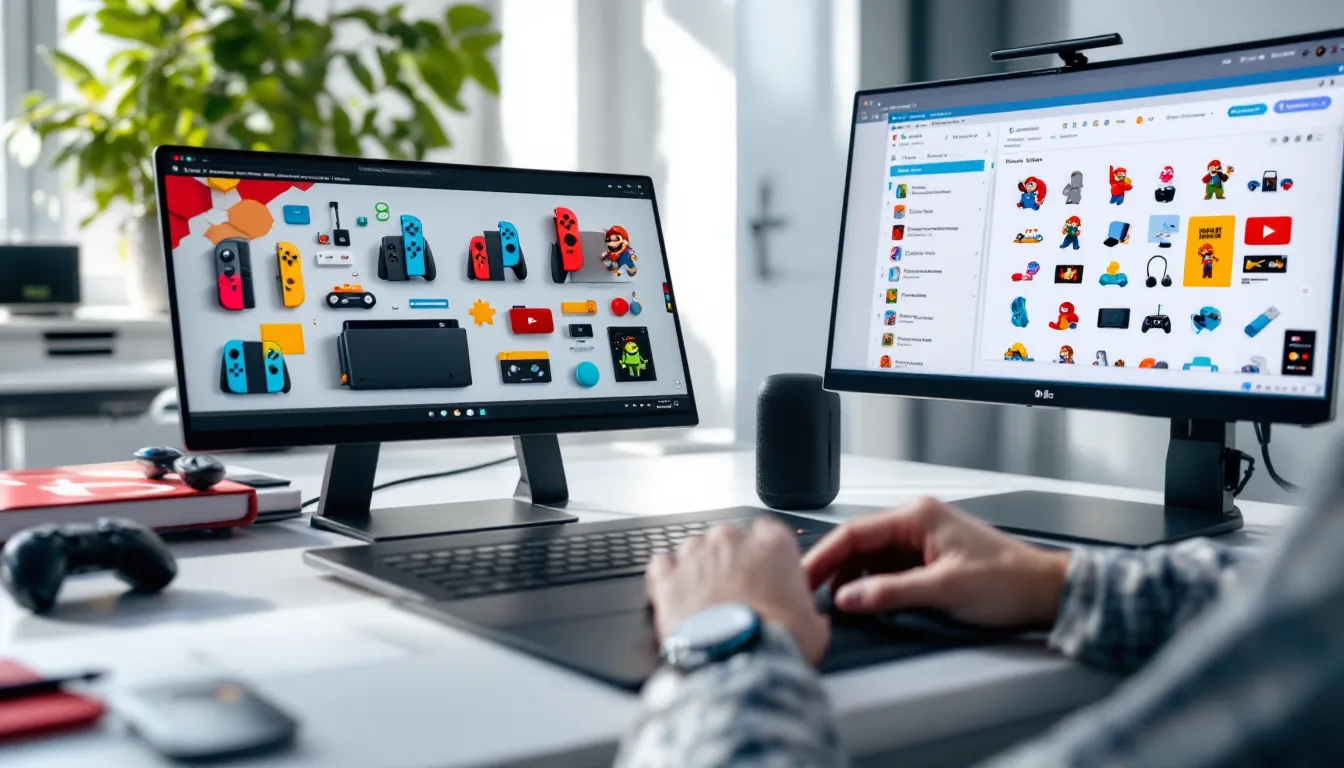
This category covers the physical devices: the original Switch, the Switch Lite, and the Switch OLED model. You’ll find them from every angle, docked, handheld, tabletop mode. Some clipart shows individual components like Joy-Cons in various colors, dock connectors, and charging cables. Hardware illustrations work great for tech tutorials, unboxing thumbnails, and comparison graphics.
Color-variant clipart is huge here. The Switch comes in multiple colorways, and creators often use these to represent different vibes or categories. Red Joy-Cons might represent action games, while pastel Switch Lite versions work for cozy gaming content.
Game Icons and Badge Designs
Icons and badges are the workhorses of gaming design. These are small, scalable graphics perfect for menus, category tags, or achievement displays. Think minimalist versions of game titles, controller icons, and gameplay mechanics represented as simple symbols. A play button with a Switch controller, a trophy icon, or difficulty level badges all fall here.
These assets are especially useful for streamers building custom overlays or for gaming websites organizing content. A row of game icons instantly communicates “what we cover.” They’re typically available in multiple sizes and formats, making them remarkably versatile.
Where to Find High-Quality Nintendo Switch Clipart
Free Clipart Resources and Databases
DeviantArt remains a goldmine for fan art and original clipart. Many artists upload free-to-use assets (though always check the license). The advantage: endless variety and often more creative, niche assets than mainstream sources offer.
Pixabay, Pexels, and Unsplash host some Nintendo Switch imagery, though selection is more limited than specialized gaming sites. These are reliable for simple, quality graphics with zero licensing headaches.
Flaticon and Freepik (free tier) have substantial collections of game icons and hardware illustrations. They’re particularly strong for minimalist badge designs and simple controller icons. The trade-off is less character-specific art, but what they have is clean and professional.
Premium Stock Image Platforms
Shutterstock, Getty Images, and Adobe Stock offer extensive Nintendo Switch clipart libraries behind paywalls. Subscription costs range from $15–30 per month, but you’re paying for legal assurance and access to professional-grade assets from licensed designers.
Etsy sits in the middle ground. Independent designers sell clipart packs starting around $5–15. You get high-quality, often custom work with clear licensing terms. This is where many streamers and YouTubers source exclusive assets for their brands.
Official Nintendo Resources and Licensing
Nintendo’s official media kit (available through their developer site and press portal) contains approved promotional artwork, screenshots, and logos. This is the safest option legally, Nintendo themselves provide it. But, availability is limited and oriented toward press and official partners.
For commercial use or content monetization, reaching out directly to Nintendo’s licensing department is the proper move, though it’s bureaucratic and slower. Most individual creators work with the resources above instead.
Best Practices for Using Nintendo Switch Clipart
Licensing, Copyright, and Fair Use Considerations
Here’s where many creators get careless: not every free clipart is actually free-to-use. Always check the license before embedding anything in your project. Look for Creative Commons Attribution, CC0 (public domain), or explicit commercial-use permission.
Fair use is misunderstood. Fair use protects transformative work, reviews, commentary, education. A YouTube review of a Switch game using Switch artwork? That’s fair use. A Twitch overlay slapped with Nintendo character art? Legally murkier. Nintendo aggressively protects its IP, so the safer route is licensing from approved sources or using their official media.
If you’re monetizing content (YouTube Partner, Twitch affiliate, selling products), buy licensed assets. It protects your channel from copyright strikes and potential revenue loss.
Quality Standards and Resolution Requirements
Resolution matters. For YouTube thumbnails, you need 1280×720px minimum at 72 DPI. For Twitch panels, 320×600px works for side panels. Discord headers need 1000×250px. Using low-res clipart on high-res displays looks amateurish and destroys your credibility.
Vectors (SVG files) are infinitely scalable and perfect if your clipart comes in that format. Raster images (PNG, JPG) have fixed pixels, so always grab the highest resolution available. A crisp 1600×1600px PNG for a character asset gives you flexibility for thumbnails, merch mockups, and print projects.
Transparency matters too. PNG with transparency (no white background) is gold. It lets you layer clipart over backgrounds without harsh edges.
Customizing Clipart for Your Gaming Projects
Raw clipart rarely fits perfectly into your existing design. Customization is where your branded voice emerges. Adjusting color schemes to match your palette, adding drop shadows or gradients, removing backgrounds, or resizing elements for specific layouts all count as customization.
Tools like Photoshop, Canva, or Affinity Designer let you tweak clipart quickly. A simple recolor can transform a generic Switch controller into something that matches your brand. Adding your logo or watermark protects your work and reinforces brand recognition.
Compositing is another layer, placing clipart intentionally alongside text, icons, and other elements. A thumbnail isn’t just clipart dropped on a background: it’s a composition where the clipart serves a specific visual purpose within your layout.
Popular Use Cases for Gaming Creators and Communities
Content Creation and YouTube Thumbnails
YouTube creators lean heavily on Nintendo Switch clipart. Thumbnails featuring character art or console imagery generate 30–50% higher click-through rates compared to text-only designs. A bold Switch screenshot, a colorful character, or a hardware image positioned with strategic contrast stops scrolls.
Thumbnail best practices: keep clipart recognizable at small sizes (viewers see 168×94px most), avoid clutter (3–4 visual elements max), and ensure contrast between clipart and background. A large Nintendo Switch OLED image against a vibrant complementary color works. Cramming 10 small sprites doesn’t.
Channel banners and profile pictures also benefit. A sleek Switch illustration in your channel art sets expectations immediately, this is a gaming channel.
Streaming Overlays and Twitch Panels
Streamers build custom overlays incorporating Nintendo Switch clipart into webcam borders, scene transitions, and alert animations. When a viewer subscribes, an animated Joy-Con controller bouncing onto screen with sound effects creates satisfaction. When a raid happens, a Switch console lighting up signals the moment’s importance.
Twitch panels (the boxes below your livestream title describing your content) benefit from clipart badges. A row of game icons tells viewers what you play. A colorful Switch controller marks your “streaming schedule” panel. These aren’t essential, but polished overlays signal professionalism and retain viewers.
Many creators use platforms like Streamlabs OBS and Overlays.Pimpmystream, which have built-in clipart libraries. For custom work, commissioning artists or buying premium packs is common.
Community Discord Servers and Gaming Blogs
Discord communities need visual organization. Channel icons featuring game-specific clipart help members navigate. A “Nintendo Switch” channel with a console icon. A “Zelda” channel with Link’s triforce. This seems basic, but it drastically improves usability and makes servers feel intentional rather than cobbled together.
Gaming blogs, like content on What Is Nintendo Switch?, use header images and inline graphics to break up text. A blog post about Switch game recommendations? Feature clipart of the games. An article about Nintendo Switch Trends 2026? Frame it with hardware clipart showing the console’s evolution.
Community posts and announcements also benefit. A Discord announcement about a gaming tournament with Switch clipart gets more attention than plain text.
Design Tips for Incorporating Nintendo Switch Imagery
Color Palettes and Brand Identity
Nintendo’s brand uses vibrant primaries, red, blue, yellow, alongside bold blacks and whites. Your design doesn’t need to copy this exactly, but complementary colors enhance Nintendo imagery. A Switch controller against a black or navy background pops. Pastels around a Switch Lite soften the vibe.
Consistency across projects builds brand identity. If your YouTube thumbnails use a specific red background, keep that red across Twitch panels and Discord servers. Viewers recognize your content by sight. The more your visual elements repeat, the stronger your brand becomes.
Contrast is mechanical necessity. If your clipart is colorful, balance it with neutral backgrounds. If your background is busy, use simpler clipart. Dark text on dark backgrounds fails: light text on light backgrounds fails. This isn’t design theory, it’s readability.
Composition and Layout Strategies
Rule of thirds applies to clipart placement. Divide your canvas into a 3×3 grid. Placing key elements on intersection points creates natural balance. A Switch console positioned at the right third of a thumbnail, with text balanced on the left, typically outperforms centered layouts.
Whitespace is your friend. Cramming every pixel with clipart looks cluttered. Breathing room around images makes designs feel intentional and premium. A single, well-positioned Switch character often works better than scattered sprites everywhere.
Scale hierarchy matters. Make important clipart large. Secondary elements smaller. If your thumbnail features a popular game, that clipart should dominate. Your logo fits in the corner, not competing for attention. Guides on Nintendo Switch Ideas: Creative often showcase composition best practices across different project types.
Tools and Software for Editing Nintendo Switch Clipart
Beginner-Friendly Design Tools
Canva is the entry point for most creators. Its library includes some Switch clipart, templates for YouTube thumbnails and Twitch panels, and drag-and-drop simplicity. No design experience needed. You can import your own clipart and compose layouts in minutes. Canva Pro ($13/month) unlocks premium assets and higher export resolution.
Pixlr (free online editor) works similarly to Photoshop but with a gentler learning curve. It handles transparency, layers, and basic effects. Perfect for quick edits, resizing clipart, adjusting colors, adding text overlays.
Photopea is a free, browser-based Photoshop alternative that’s surprisingly capable. If you’ve used Photoshop, Photopea’s interface feels familiar. It imports PSD files and handles complex edits without requiring a subscription.
Professional Editing Software
Photoshop remains the industry standard. It handles clipart editing, compositing, and effects at professional depth. The learning curve is steep, but the capabilities are limitless. Adobe’s subscription ($20/month) includes all Creative Cloud apps.
Affinity Designer ($70 one-time purchase) bridges the gap between beginner tools and Photoshop. It’s powerful, supports both raster and vector work, and doesn’t require ongoing subscription payments. Many freelancers and small creators choose it over Photoshop for cost efficiency.
Clip Studio Paint ($4.49/month) is underrated for gaming creators. Designed with manga and comic artists in mind, it excels at digital illustration and compositing. If you’re creating custom clipart beyond editing existing assets, this is worth exploring.
Resources like How-To Geek offer solid tutorials on using these tools for gaming graphics and streaming setups. Many creators also reference GameSpot for design inspiration tied to gaming announcements and releases.
For streamers specifically, Nintendo Life frequently covers design trends and visual aesthetics in gaming content, which can inform your clipart choices.
Conclusion
Nintendo Switch clipart has evolved from optional decoration to essential infrastructure for gaming creators. Whether you’re designing YouTube thumbnails, building Twitch overlays, or managing Discord communities, quality visual assets differentiate your work from generic alternatives.
The ecosystem for sourcing clipart is mature now. Free options like DeviantArt and Pixabay work for most projects. Premium platforms and Etsy offer licensed, exclusive assets if you’re willing to invest. Nintendo’s official resources provide legal certainty for professional applications. Understanding licensing, resolution requirements, and customization techniques separates polished creators from amateurs.
As you build your gaming presence, treat clipart strategically. Consistency builds recognition. High resolution prevents embarrassment. Thoughtful composition turns generic images into branded assets. The effort you invest in visual quality directly impacts how viewers perceive your channel or publication. In competitive gaming content spaces, that matters more than you’d think. Your next project could be the thumbnail that clicks with an algorithm, and the right clipart might be what tips the scale.