Hogwarts Legacy brings players into a magical open-world adventure set in the 1800s wizarding world. Developed by Avalanche Software and published by Warner Bros. Games, this action RPG launched in February 2023 to massive commercial success. Players create their own witch or wizard, attend Hogwarts School of Witchcraft and Wizardry, and uncover ancient secrets that threaten both the magical and muggle worlds.
The game offers an experience separate from the Harry Potter storyline, giving fans a fresh perspective on the beloved universe. From casting spells in dramatic duels to flying broomsticks across the Scottish Highlands, Hogwarts Legacy delivers the fantasy many Potter fans have dreamed about for decades. This guide covers everything players need to know about gameplay mechanics, exploration, character building, combat, and essential tips for beginners.
Table of Contents
ToggleKey Takeaways
- Hogwarts Legacy is an open-world action RPG set in the 1800s wizarding world, offering a standalone story separate from Harry Potter.
- Combat rewards creative spell combinations—use control spells like Levioso and Accio to set up devastating damage chains.
- Explore Hogwarts Castle thoroughly early on, as it contains hidden chests, collectibles, and areas that unlock as you upgrade Alohomora.
- Prioritize unlocking the Room of Requirement for crafting potions, growing plants, and rescuing magical beasts that provide upgrade materials.
- Complete Merlin Trials to expand your inventory space and avoid early-game gear management frustration.
- Don’t skip companion quests—they offer some of the best storylines in Hogwarts Legacy and unlock powerful abilities like the Unforgivable Curses.
Gameplay Overview and Core Mechanics
Hogwarts Legacy operates as a third-person action RPG with heavy exploration elements. Players control a fifth-year student who possesses an unusual ability to perceive and wield ancient magic. The main storyline follows this student as they investigate a goblin rebellion and discover the source of their unique powers.
The gameplay loop combines several core activities. Attending classes teaches new spells and introduces key characters. Exploration rewards curiosity with collectibles, gear, and side quests. Combat tests spell mastery against dark wizards, poachers, and magical creatures.
Quests drive progression in Hogwarts Legacy. Main quests advance the central narrative, while relationship quests develop bonds with companion characters like Sebastian Sallow and Natsai Onai. Side quests offer additional context about the wizarding world and provide valuable rewards.
The game features a talent system that unlocks passive abilities. Players earn talent points through leveling and spend them across five categories: Spells, Dark Arts, Core, Stealth, and Room of Requirement. This system allows players to customize their playstyle significantly.
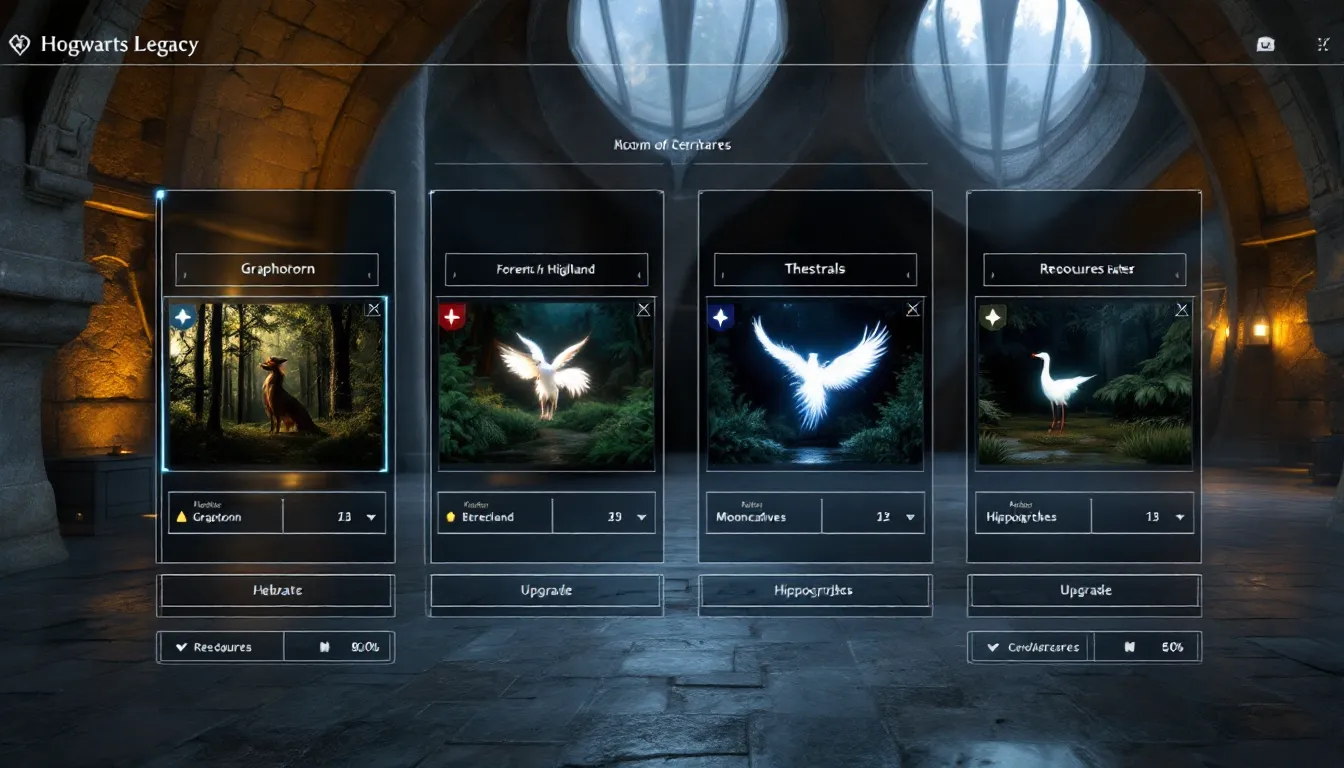
Gear management also plays a central role. Equipment affects both stats and appearance, though players can transmog items to maintain their preferred look while keeping optimal stats. The Room of Requirement serves as a personal space where players craft potions, grow plants, and care for rescued magical beasts.
Exploring the Open World of Hogwarts and Beyond
The open world in Hogwarts Legacy stands as one of the game’s greatest achievements. Hogwarts Castle itself contains hundreds of rooms, secret passages, and hidden collectibles. Players can spend hours just wandering the corridors, discovering moving staircases, talking portraits, and references to the broader wizarding world.
Beyond the castle, the Scottish Highlands stretch out with diverse biomes. Dense forests hide ancient ruins. Coastal cliffs overlook crashing waves. Small wizarding villages like Hogsmeade offer shops, side quests, and local color. Each region contains its own secrets, from Merlin Trials that test puzzle-solving skills to enemy camps filled with valuable loot.
Travel options expand as players progress through Hogwarts Legacy. Walking works fine for short distances, but broomstick flying transforms exploration. Players unlock broom access early in the story, and upgrading to faster models makes traversal even smoother. Fast travel points called Floo Flames dot the map, letting players teleport between discovered locations instantly.
Hidden collectibles encourage thorough exploration. Field Guide pages document aspects of wizarding culture. Demiguise Statues unlock the Alohomora spell’s higher levels, granting access to previously locked areas. Astronomy Tables reveal constellations at night. Collection items like Ancient Magic Hotspots boost combat abilities.
The attention to environmental detail makes Hogwarts Legacy feel authentic. Seasons change through the story. Day and night cycles affect NPC schedules and quest availability. Weather shifts from clear skies to rain and snow. This living world rewards players who take time to absorb its atmosphere.
Character Customization and Progression
Character creation in Hogwarts Legacy offers substantial options. Players choose their character’s appearance, including face shape, skin tone, hair style, scars, and voice. Importantly, the game separates voice choice from body type, allowing flexible character expression.
House selection happens early through either the Sorting Hat ceremony or direct player choice. Each house, Gryffindor, Slytherin, Ravenclaw, and Hufflepuff, provides a unique common room and some exclusive quests. The house choice doesn’t dramatically affect gameplay, so players should pick based on personal preference.
Progression in Hogwarts Legacy follows a traditional experience system. Defeating enemies, completing quests, and discovering secrets all grant experience points. Leveling up increases health and provides talent points for unlocking new abilities.
The talent tree allows meaningful customization. Spell talents enhance specific magic types, making Incendio spread fire to nearby enemies, for example. Dark Arts talents boost forbidden curses for players who embrace that path. Core talents improve general capabilities like dodge distance and spell cooldown reduction.
Gear provides the primary stat boosts. Offensive gear increases damage output, while defensive gear reduces incoming damage. Traits on gear offer additional bonuses, like increased damage against specific enemy types. The Room of Requirement’s enchanted loom lets players add or upgrade these traits.
Appearance customization extends beyond gear. Players unlock cosmetic options through exploration and vendors. The transmog system means players never sacrifice style for stats. Want to wear first-year robes while keeping endgame stats? The game supports that.
Combat System and Spell Casting
Combat in Hogwarts Legacy feels dynamic and satisfying once players master its systems. The core loop involves casting offensive spells, blocking or dodging enemy attacks, and exploiting enemy weaknesses through spell combinations.
Players equip spells to four face-button slots, with multiple loadouts available by holding the right trigger. This setup allows quick access to many spells mid-combat. Basic attacks come from the primary fire button, casting a repeatable damage spell that doesn’t consume resources.
Control spells form the foundation of effective combat in Hogwarts Legacy. Levioso lifts enemies into the air. Accio pulls them close. Depulso pushes them away. These spells break enemy defenses and set up damaging combos. Lifting an enemy with Levioso, then hitting them with Descendo slams them to the ground for massive damage.
Damage spells include familiar favorites and some surprises. Incendio sets enemies ablaze at close range. Confringo fires explosive projectiles from distance. Diffindo slashes enemies with magical force. Each damage spell has different range and area-of-effect properties.
The three Unforgivable Curses become available through Sebastian Sallow’s questline. Imperio turns enemies into temporary allies. Crucio causes damage over time. Avada Kedavra kills most enemies instantly. Using these curses reflects a darker path, though the game doesn’t permanently track morality.
Shield colors matter in combat. Enemies glow with colored shields that require matching spell types to break. Yellow shields need control spells. Purple shields need damage spells. Red shields need transformation or force spells. Quickly reading and reacting to these colors separates skilled players from button mashers.
Tips for New Players
Starting Hogwarts Legacy can feel overwhelming given its size and systems. These tips help new players find their footing faster.
First, explore Hogwarts thoroughly before leaving. The castle contains dozens of chests, field guide pages, and hidden areas. Many doors require Alohomora at various levels, so revisit areas after upgrading that spell. The castle rewards curiosity with gear, cosmetics, and interesting discoveries.
Second, prioritize unlocking the Room of Requirement. This personal space becomes essential for crafting potions, growing plants, and managing magical beasts. The earlier players access it, the more benefits they accumulate over the playthrough.
Third, collect Merlin Trials whenever possible. These environmental puzzles increase inventory space upon completion. Limited inventory causes frustration early on, and expanding it makes gear management much smoother.
Fourth, experiment with spell combinations during combat. Hogwarts Legacy rewards creative spell use. Launching an enemy with Levioso, pulling them close with Accio, then hitting them with Incendio creates satisfying damage chains.
Fifth, don’t ignore the Vivarium in the Room of Requirement. Rescued magical beasts produce materials used for gear upgrades. Building a collection of beasts early creates a steady supply of these resources.
Sixth, complete companion quests as they become available. These relationship storylines offer some of the best content in Hogwarts Legacy, including powerful spell unlocks through Sebastian’s questline.
Finally, adjust difficulty as needed. Hogwarts Legacy offers several difficulty settings that can be changed anytime. Players wanting a challenge should try hard mode, while those focused on story can play on easy without penalty.