Black Friday’s the one time of year when Nintendo Switch prices actually dip, and if you’re hunting for a console at a discount, timing matters. Whether you’ve been eyeing a standard Switch, the budget-friendly Lite, or the premium OLED model, the annual shopping event offers genuine savings that don’t pop up every month. But knowing where to look, what to expect pricewise, and which bundles actually deliver value will make the difference between scoring a legitimate deal and overpaying for hyped-up bundles loaded with games you’ll never play. This guide breaks down Nintendo Switch Black Friday pricing for 2026, covering historical trends, current retail strategies, and practical tactics to maximize your savings across multiple platforms.
Table of Contents
ToggleKey Takeaways
- Nintendo Switch Black Friday price discounts typically range from $40–$60 off standard models ($249–$259), $20–$40 off OLED ($309–$329), with bundled games increasingly replacing straight price cuts as the primary value strategy.
- Bundle deals should be evaluated mathematically by comparing total component prices rather than trusting marketing hype—skip bundles with games you won’t play, as bundled content often includes retailer inventory clearance.
- Major retailers (Best Buy, Walmart, Target, Amazon) compete aggressively enough to match prices within 24 hours, so plan ahead with price-tracking tools and set a budget ceiling before Black Friday to avoid impulse overspending.
- If you miss Black Friday, comparable Nintendo Switch deals appear in January clearance sales, summer promotions, and year-round refurbished options with full warranties at $40–$80 discounts.
- Hybrid shopping (comparing online, checking in-store stock, and using buy-online-pickup-in-store options) eliminates Black Friday chaos while securing the best available deal without delivery delays.
- Choose your console model first (standard for versatility, Lite for budget handheld-only, OLED for premium screen quality), then track specific bundle contents rather than letting promotional hype drive your purchasing decision.
Understanding Nintendo Switch Black Friday Pricing
Historical Black Friday Discounts on Nintendo Switch
Nintendo Switch discounts during Black Friday haven’t been dramatic year to year, but they’re consistent. Historically, you’ll see the standard Switch drop $40–$60 from its regular $299 price tag, landing somewhere in the $249–$259 range. The Switch OLED model, which normally sits at $349, typically sees $20–$40 cuts, bringing it to roughly $309–$329. Switch Lite, the cheapest option at $199, occasionally dips to $179–$189, though discounts are lighter here because the margin is already lean.
What’s changed recently is bundle strategy. Retailers realized consumers prefer bundled content over straight price cuts. A Switch with two included games used to be rare: now it’s almost standard on Black Friday. The 2025 cycle saw major retailers bundling Switch consoles with The Legend of Zelda: Tears of the Kingdom, Mario Party Superstars, or Mario Kart 8 Deluxe, effectively adding $40–$60 in value without cutting the headline price. This approach lets Nintendo maintain perceived value while giving shoppers real savings.
Deals also vary by console generation. Original Switch models from 2017 are phased out, so discounts on remaining stock hit deeper, sometimes $80–$100 off if retailers are clearing inventory. Refurbished and open-box units sometimes appear at 15–25% off, though these come with caveats around warranty coverage.
Factors That Influence Switch Pricing During Sales Events
Inventory levels drive everything. When new hardware launches or inventory runs thin before a major sale, prices stay firm. Retailers have less stock to move aggressively, so they hold margins. Conversely, when inventory is abundant and retailers want to clear warehouse space, competition intensifies and prices drop faster.
Retailer competition shapes deals too. Best Buy, Walmart, Target, and Amazon all compete for the same audience, and they watch each other’s prices carefully. If one retailer drops the Switch OLED to $309, competitors typically match within 24 hours. This creates a race-to-the-bottom dynamic that benefits shoppers, but only if you know where to look and act quickly.
Manufacturer recommendations matter more than people realize. Nintendo sets suggested retail prices and can guide retailers on acceptable discount floors. When Nintendo wants to push volume before a new console announcement or during a soft sales period, pricing flexibility increases. When demand is already high, recommended retail pricing stays rigid.
Seasonality also plays a role. Black Friday itself (the day after U.S. Thanksgiving) gets the biggest push, but Cyber Monday and extended holiday weeks sometimes see deeper cuts as retailers fight for late-season shoppers. End-of-month and end-of-quarter clearance events can rival Black Friday pricing, especially on slow-moving SKUs.
Current Nintendo Switch Models and Their Typical Price Points
Standard Switch Pricing
The standard Nintendo Switch remains the most versatile option, supporting docked TV play, tabletop mode, and handheld use. As of early 2026, retail MSRP holds steady at $299 for new units. This model comes with two Joy-Con controllers and a dock, making it a complete out-of-box experience. Black Friday pricing for standard Switch typically drops to $249–$259 for the console alone, though retailers increasingly bundle in games.
Availability has stabilized since the console’s 2017 launch. You’ll find stock reliably at major retailers, Amazon, Best Buy, Walmart, Target, GameStop, and Nintendo’s official store. Refurbished official units sometimes appear at $219–$239 during Black Friday, though these carry shorter warranties (typically 90 days vs. one year for new). Open-box returns occasionally hit the market at $249–$269 with uncertain condition variables.
Color options fluctuate by season. The classic gray Joy-Con combo is always in stock. Red/blue variants sometimes command small premiums or discounts depending on stock depth. Specialty colors (white, neon, pastels) cycle in and out, and older discontinued colors occasionally appear in clearance sections at slight discounts, though this is rare and unpredictable.
Switch Lite and Switch OLED Models
The Switch Lite, Nintendo’s budget-focused handheld-only model, has a $199 MSRP. It’s lighter, smaller, and cheaper than the standard Switch, but you can’t dock it to a TV. This matters for families wanting multiple modes of play. Black Friday discounts on Switch Lite are typically light, $179–$189 at best, because the initial price is already aggressively positioned. Retailers make less margin on the Lite, so they don’t discount heavily. The real value of buying Lite on Black Friday comes from bundled games, not the console price itself.
The Switch OLED model entered the market in October 2021 as the premium option at $349. It features a brighter, larger OLED screen, better audio, and improved kickstand compared to the standard model, but it plays the same game library. Black Friday deals on Switch OLED range from $309–$329, a solid $20–$40 discount. Like the standard Switch, OLED deals often come bundled with games. This model appeals to serious players, longer handheld sessions, and people replacing worn-out original Switches.
OLED refurbished units occasionally appear at $279–$299 on Black Friday, representing steeper discounts but with abbreviated warranty periods. New-in-box OLED units rarely exceed the $329 floor during Black Friday unless retailers bundle multiple games or accessories simultaneously. OLED stock is generally stable: it’s the most recent hardware revision, so Nintendo maintains production and retailers don’t have inventory pressure driving aggressive discounts.
Where to Find the Best Black Friday Deals on Nintendo Switch
Major Retailers and Their Black Friday Strategies
Best Buy positions itself as the tech hardware destination, and Black Friday strategy reflects that. Best Buy historically offers competitive baseline pricing on Switch consoles (matching or slightly beating other major retailers) and adds value through their Geek Squad Protection Plans and bundle incentives. They often feature exclusive game bundles, Nintendo Switch with Mario Kart 8 Deluxe and a Pro Controller, for example. Best Buy members get early access to deals, typically 48–72 hours before the public sale, which matters when stock is limited.
Walmart and Target compete heavily on volume and traffic. Both use Switch pricing as a loss leader to drive foot traffic, meaning you’ll often find the lowest headline prices at these retailers. Target’s benefit is their Circle membership program, which stacks additional 5–10% discounts on top of sale prices for members. Walmart leverages their online platform and pickup services, making Black Friday shopping less dependent on in-store crowds. Both retailers maintain deep stock and rarely sell out of Switch units completely.
Amazon’s approach is algorithmic and continuous, they don’t necessarily spike deals on Black Friday the same way brick-and-mortar retailers do. But, Prime members often see exclusive early deals on Black Friday Eve (often Thursday), and overall pricing stays competitive. Amazon’s strength is convenience: shipping is fast for Prime members, and returns are hassle-free. The downside: Switch prices occasionally creep up after initial deals sell through.
GameStop, historically the gaming hub, has downsized physical footprint but remains relevant for Black Friday. They typically match or slightly undercut big-box competitors on Switch pricing and often bundle exclusive pre-owned games or trade-in credits alongside new console sales. Their used game inventory during Black Friday can be a hidden value lever if you’re willing to grab bundled used titles.
Nintendo’s official online store sometimes offers Black Friday deals directly, particularly for OLED models and bundles. These deals typically match major retailers but occasionally include exclusive bundles (Switch + eShop credit, for example). Shipping time is the tradeoff: Nintendo Direct-to-consumer fulfillment can take longer than Amazon or local retailers.
Online vs. In-Store Black Friday Shopping for Gaming Hardware
In-store shopping lets you inspect hardware in person before buying. You can check for cosmetic defects, ensure all accessories are included, and walk out with the console immediately. But, in-store Black Friday is chaotic, crowds, limited hours, parking headaches, and the real risk of arriving to “sold out” even though advertised stock. Stock can deplete within hours at major retailers.
Online shopping eliminates the chaos and guarantees availability (assuming no flash sellouts). You can browse multiple retailers simultaneously, compare bundles, and checkout from your couch. The risk is shipping delays during the holiday rush: if the deal requires fast delivery and you’re buying the week before Christmas, you might miss the window. Return policies also matter online, Amazon’s is excellent, but some retailers have stricter holiday return windows.
A hybrid approach works best: Scout online deals Thursday/Friday morning, identify the best price and bundle, then decide whether to order online or run to a local retailer if the deal is fleeting and local stock is confirmed. Many retailers now offer buy-online-pickup-in-store (BOPIS) options, combining the convenience of comparing online with the immediacy of same-day pickup.
International shoppers should note that Nintendo Switch black friday price deals are primarily U.S.-focused. UK, Canada, and other regions have their own Black Friday schedules and pricing structures. Currency conversions and regional retailers (Currys, Game UK, Amazon.co.uk) will have different deals than U.S.-based sales.
Black Friday Bundle Deals Worth Considering
Gaming Bundle Value Analysis
Nintendo Switch bundle deals package the console with one or more games, occasionally adding accessories like Pro Controllers or carry cases. The critical question: Is the bundled content worth the bundle price, or are you paying retail for games you’d rather buy separately during their own sales?
Typical 2026 Black Friday Switch bundles look like:
- Switch + Mario Kart 8 Deluxe: Historically priced at $329–$349 (console at $249–$259 + game at $59.99 MSRP). Value is solid because Mario Kart rarely discounts deeply: you’re saving $10–$20 versus buying separately.
- Switch + The Legend of Zelda: Tears of the Kingdom: Usually $349–$369. Zelda is evergreen pricing: it rarely goes below $49.99. The bundle saves you $10–$30 compared to retail both items separately.
- Switch OLED + Game Bundle: Priced around $379–$399 (OLED at $349 + one game included). These offer less savings than standard Switch bundles because OLED is already positioned as premium. You’re paying more upfront for the hardware quality.
The math is simple: Compare the bundle price to buying each component at its Black Friday/current price independently. If the bundle totals less, it’s worth considering. If it costs the same or more, skip it. Sites like Nintendo Life often break down bundle values in real-time during Black Friday, so you can make informed comparisons quickly.
One caveat: Some bundles include older or less popular games that retailers are clearing inventory on. A bundle pairing Switch with a 2018 title nobody wants isn’t a deal, it’s bundled excess inventory. Stick to current, popular titles you’d actually play.
Accessories and Game Bundles That Maximize Savings
Accessories rarely get as sharp a price cut as consoles, but Black Friday bundles can offer savings. Pro Controllers normally retail for $69.99: Black Friday prices dip to $49.99–$59.99, a 14–29% discount. If a bundle includes a Pro Controller alongside the console and games, evaluate whether that controller is something you wanted anyway. A typical bundle pairing might be: Switch + Mario Kart 8 Deluxe + Pro Controller, priced around $349–$369. Breaking it down: Console $249–$259, game $49.99–$59.99, controller $49.99–$59.99. If bundled at $349, you’re saving $10–$30.
Carry cases and protective gear (screen protectors, tempered glass, silicone grips) bundle in at minimal cost to retailers, so bundled case inclusion is a nice-to-have but shouldn’t drive your decision. You can buy quality third-party cases for $15–$30 year-round, so bundled cheap cases aren’t a major value add.
Game bundles involving digital versus physical matter. Physical game bundles give you a cartridge: digital bundles might include eShop credit. Physical is resellable if you hate the game: digital credit can only be spent in the eShop. From a value perspective, physical game bundles are slightly preferable because you’re not locked into Nintendo’s ecosystem pricing.
Sub-$200 Switch Lite bundles occasionally appear with two or three digital game codes. These move volume for retailers but often bundle older titles or games with niche appeal. Only grab these if you actually want the included games: otherwise, you’re paying for bundled clutter.
Tips for Maximizing Your Nintendo Switch Black Friday Purchase
Planning and Preparation Strategies
Start by deciding which model fits your lifestyle. Do you want TV docking? Buy the standard Switch. Handheld only? Switch Lite. Chasing the best screen? Switch OLED. This choice determines your budget and the deals you should track. Then set a price ceiling, your absolute maximum you’re willing to spend. Black Friday creates urgency: having a predetermined limit prevents impulse overspending.
Track prices across retailers starting two weeks before Black Friday. Many retailers leak their Black Friday flyers online early, and prices sometimes creep out mid-November. Use price tracking tools like CheapShark or Honey to monitor historical pricing. If a Switch hits your target price before Black Friday, buy it, you’re unlikely to see significantly better deals, and you avoid Black Friday chaos.
Identify which games you actually want. Don’t let bundled games drive your console purchase. If you hate the bundled title, you’re essentially overpaying. Cross-reference Nintendo Switch Trends 2026 guides to understand the current library and what genuinely appeals to you.
Check return policies before buying. Black Friday sales often have stricter return windows (15–30 days instead of the standard 30–60). If you’re uncertain about a purchase, confirm the return policy at that specific retailer before checkout. This matters if the bundle includes a game you might not like.
Join retailer loyalty programs early. Target Circle, Best Buy My Best Buy, and Walmart+ memberships sometimes unlock exclusive earlier access or additional discounts. These memberships are free (except Walmart+) and are easy to join. Doing this a few weeks before Black Friday ensures you’re eligible for member-exclusive deals.
Common Black Friday Shopping Mistakes to Avoid
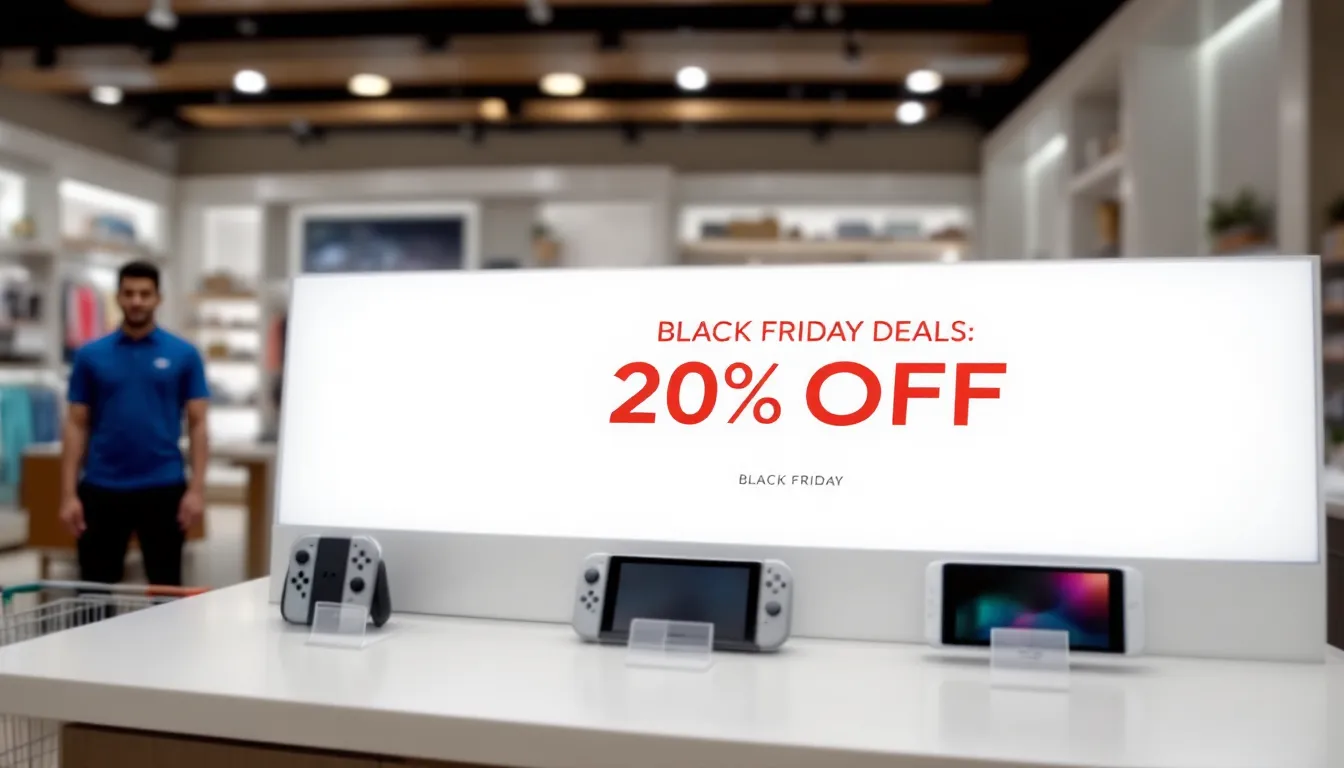
Don’t chase hype over value. If retailers are hyping a “massive 20% off” Switch bundle, do the math. Is $20–$40 off genuinely massive, or is that standard for Black Friday? Hype-driven marketing often obscures mediocre deals. Compare hard numbers, not percentages.
Avoid bundles with games you don’t want. This is the biggest trap. A bundle pricing $50 below your target price sounds amazing until you realize you’re buying a game you’ll never touch. That $20 bundled game at a $0 perceived discount isn’t free, you’re paying retailer margin on unwanted inventory.
Don’t assume console condition when buying refurbished or open-box. These units are cheaper but carry risks. Inspect thoroughly if buying in-store. Online, confirm the seller’s specific condition description and warranty terms. Saving $30 on a refurb with a 90-day warranty that dies in 100 days is a bad deal.
Resist panic buying during stock-outs. If your first-choice retailer sells out, don’t immediately grab a worse deal elsewhere. Other retailers typically restock within 24–48 hours during Black Friday week, or prices stabilize. Patience often reveals better options than panic-buying.
Don’t ignore compatibility across your ecosystem. If you already own a Switch and plan to buy a second model (Lite for portability, OLED for screen quality), confirm that game cartridges and digital purchases transfer between models. They do, which is great, but it’s worth confirming before buying to avoid regret. The best Nintendo Switch for a second purchase depends on your primary use case.
Avoid shipping during peak holiday periods without tracking. Order Thursday or Friday at latest if you need the console for Christmas. Ordering the week before Christmas during Black Friday sales risks delivery delays, and you may not receive the console in time.
Alternative Timing Opportunities Beyond Black Friday
Cyber Monday and Year-Round Sales Events
Cyber Monday (the Monday after Thanksgiving in the U.S.) is often overshadowed by Black Friday, but pricing can be equally competitive. Retailers use Cyber Monday to clear remaining Black Friday inventory and introduce new deals for online shoppers specifically. Switch pricing on Cyber Monday typically mirrors Black Friday, so don’t expect dramatically better deals, but availability might be better if you missed the Friday rush.
Other seasonal sales rival Black Friday in terms of discounts. Walmart+’s seasonal sales (summer, back-to-school, early December), Amazon Prime Day (mid-July), and Target’s Red Card promotions throughout the year sometimes offer Switch pricing competitive with Black Friday. These events are less publicized than Black Friday, so fewer people hunt aggressively, and stock sometimes lingers longer, a hidden advantage if you have patience.
End-of-quarter clearance sales (March, June, September, December) occasionally produce Switch discounts as retailers adjust inventory for new fiscal periods. These deals are unpredictable and depend on broader market conditions, but they’re worth monitoring if you’re shopping outside Black Friday.
Nintendo’s official announcements about new console generations or major hardware revisions sometimes trigger retailer price cuts on existing models. If Nintendo announces a “Switch 2” or successor hardware, current Switch models will likely drop $20–$50 as retailers clear old stock to make shelf space for new products. This is speculative, but worth tracking Nintendo Switch Trends 2026 reports to catch wind of potential hardware announcements that could unlock better deals.
When to Buy Nintendo Switch Outside the Holiday Season
Early January represents a secondary sales window. After-holiday returns create excess inventory, and retailers discount aggressively to clear it. January 2–15 sometimes matches or exceeds Black Friday pricing without the crowds. If you missed Black Friday or decided to delay your purchase, early January is your second-best window.
Back-to-school season (July–August) occasionally brings Switch deals as retailers promote affordable entertainment for students heading to college. These deals aren’t as aggressive as Black Friday, but $20–$30 discounts appear regularly. The psychology is different, retailers position Switch as a portable entertainment device for students, not a holiday gift.
Rebuilt and refurbished units are increasingly available year-round. If you don’t need new-in-box, certified refurbished Switch consoles from Nintendo (through their official refurbished store) or retailers like Amazon often carry discounts year-round. Nintendo refurbs carry full warranties, unlike third-party refurbished units, making them relatively safe. You’ll save $40–$80 versus new for essentially identical hardware.
Waitlist and price-watch tools work year-round. Services like Digital Trends gaming deal sections update constantly, and Reddit communities like r/NintendoSwitch often flag regional deals and flash sales. If you set alerts properly, you can catch micro-sales (1–2 day retailer-specific promotions) that match Black Friday pricing outside the holiday season. These sales have less visibility, so stock sometimes lasts longer.
Net: If you miss Black Friday, don’t panic. The next 4–6 months (January, summer sales, back-to-school) offer comparable deals with less urgency and often less competition from other shoppers.
Conclusion
Nintendo Switch Black Friday pricing in 2026 will likely mirror historical patterns: $40–$60 off standard models, $20–$40 off OLED, minimal Lite discounts, and heavy bundling of games and accessories. The real value comes from bundled game selection and knowing where to shop. Best Buy, Walmart, Target, and Amazon compete aggressively enough that you’ll see similar pricing across platforms, the difference comes down to loyalty program benefits, bundle contents, and convenience (in-store vs. online delivery).
Plan ahead by identifying which model and game library actually appeals to you. Compare bundles mathematically, not just by headline discounts. If you miss Black Friday, January and summer sales offer comparable deals with less chaos. And if refurbished units fit your comfort level, year-round options exist at genuine discounts without waiting for seasonal sales.
The console itself hasn’t changed dramatically since 2017, so buying during Black Friday versus waiting a few months makes minimal gameplay difference. Buy when pricing aligns with your budget and bundle contents match your actual game interests. That’s the real deal.